
Introduction
Dua (supplication) is one of the greatest acts of worship in Islam. It is a direct conversation between a servant and Allah (SWT), allowing believers to seek guidance, forgiveness, mercy, protection, and blessings. Whether you are facing hardships, expressing gratitude, or asking for success in this life and the Hereafter, dua is a powerful means of connecting with your Creator.
In this article, we will explore how to perform dua correctly, why it is so important, and what makes a dua effective according to the teachings of Islam.
What Is Dua?
Dua is the act of calling upon Allah (SWT) with sincerity. It is an expression of faith, humility, and complete reliance on Him. Allah loves those who ask Him, and He promises to respond to those who sincerely call upon Him.
Allah says in the Quran:
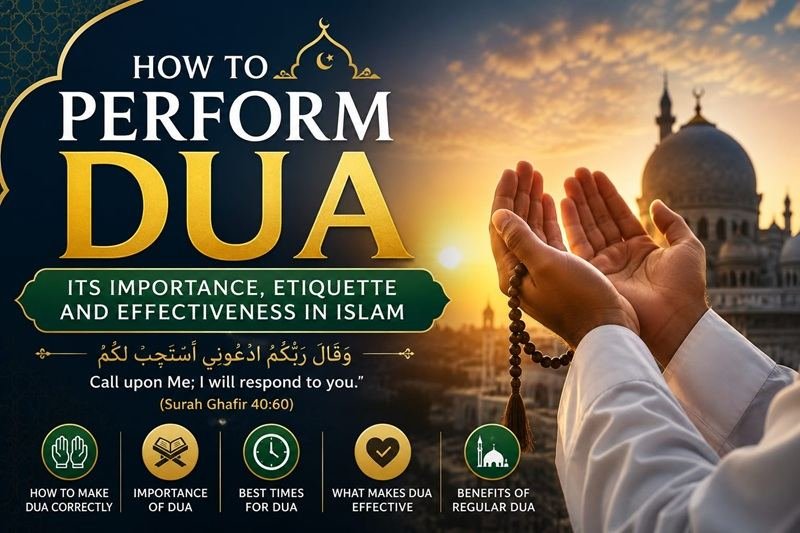
"Call upon Me; I will respond to you.
(Surah Ghafir 40:60)
The Importance of Dua in Islam
1. Dua is an Act of Worship
The Prophet Muhammad (ﷺ) said:
"Dua is worship."
Every sincere supplication is rewarded, whether Allah grants it immediately, delays it for a better time, or replaces it with something even better.
2. It Strengthens Faith
Making dua reminds us that Allah alone has the power to help us. It strengthens our trust (Tawakkul) and increases our dependence on Him.
3. Brings Peace to the Heart
When believers pour out their worries before Allah, they find comfort, hope, and tranquility, knowing that Allah hears every prayer.
4. Seeks Forgiveness and Mercy
Dua is one of the best ways to seek Allah's forgiveness and mercy for our sins and shortcomings.
How to Perform Dua Correctly
Following these etiquettes can make your supplication more meaningful:
1. Begin with Praise of Allah
Start by praising Allah using His beautiful names and attributes.
Example:
Alhamdulillahi Rabbil 'Alamin.
2. Send Salawat Upon the Prophet (ﷺ)
Send blessings upon Prophet Muhammad (ﷺ).
Example:
Allahumma salli 'ala Muhammad wa 'ala aali Muhammad.
3. Raise Your Hands
It is recommended to raise your hands while making dua, showing humility and need before Allah.
4. Face the Qiblah (If Possible)
Facing the Qiblah is recommended, although dua is accepted in any direction.
5. Ask with Humility and Sincerity
Speak to Allah with complete faith, humility, and hope.
6. Ask for Both Worldly and Hereafter Benefits
Pray for guidance, health, halal sustenance, forgiveness, protection, and success in the Hereafter.
7. End with Salawat
Conclude your dua by sending blessings upon the Prophet Muhammad (ﷺ).
Best Times for Acceptance of Dua
Some of the most blessed times include:
- During the last third of the night.
- While fasting, especially before breaking the fast.
- During Sujood (prostration).
- Between the Adhan and Iqamah.
- On Fridays, especially during the special hour before Maghrib.
- While traveling.
- During rainfall.
- On the Day of Arafah.
What Makes Dua Effective?
Have Complete Faith
Believe with certainty that Allah hears every supplication.
Be Patient
Do not become discouraged if your dua is not answered immediately. Allah's timing is always perfect.
Earn Halal Income
Halal food and lawful earnings contribute to the acceptance of dua.
Avoid Sins
Sincere repentance and avoiding major sins help remove barriers to acceptance.
Continue Making Dua
Never stop asking Allah. Persistent supplication is beloved to Him.
Common Mistakes While Making Dua
- Being impatient for an immediate answer.
- Giving up after making dua only once.
- Asking for sinful or harmful things.
- Neglecting obligatory prayers while expecting duas to be accepted.
- Making dua without sincerity or concentration.
Benefits of Regular Dua
- Brings you closer to Allah.
- Increases peace and contentment.
- Strengthens patience during trials.
- Protects against difficulties and calamities.
- Brings blessings into daily life.
- Increases hope and gratitude.
- Leads to success in this world and the Hereafter.
Frequently Asked Questions
Can I make dua in my own language?
Yes. You may ask Allah in any language you understand. Allah knows every language and every intention.
Can I make dua without raising my hands?
Yes. Raising the hands is recommended in many situations but is not obligatory.
Does Allah answer every dua?
Yes. Allah answers every sincere dua in the way that is best for the believer. The answer may come immediately, later, by preventing harm, or as a reward in the Hereafter.
Conclusion
Dua is a priceless gift from Allah that allows every believer to communicate directly with Him at any time. It is a source of hope, mercy, guidance, and strength. By making dua with sincerity, patience, and trust in Allah, Muslims strengthen their relationship with their Creator and receive countless blessings in this life and the next.
Never underestimate the power of a sincere dua. Continue asking Allah in every situation, for He is the Most Merciful, the All-Hearing, and the One who responds to those who call upon Him.
May Allah accept all our duas, forgive our sins, guide us to the straight path, and bless us with goodness in this world and the Hereafter. Ameen.